
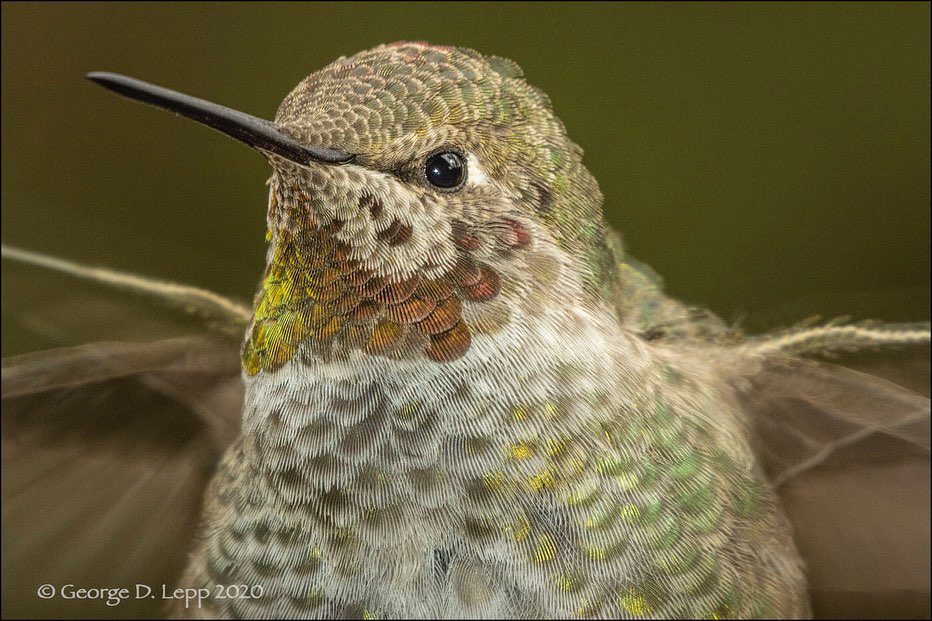
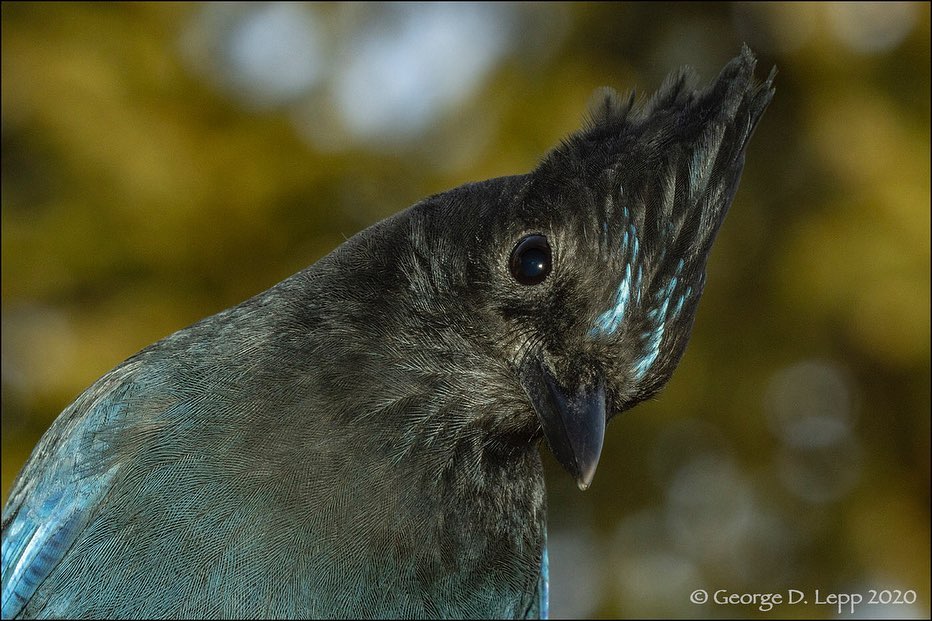
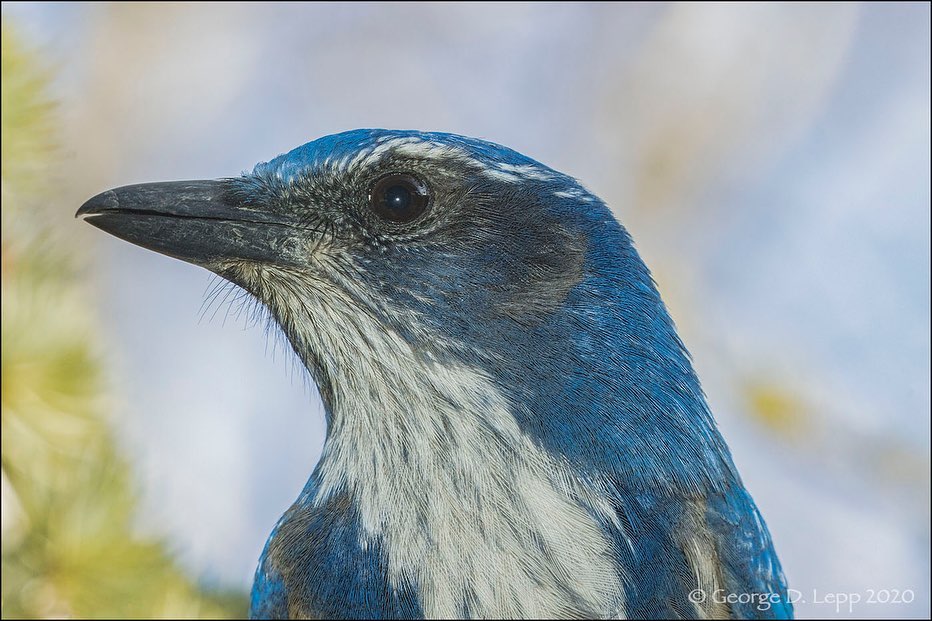
#BehindTheShot with #CanonExplorerOfLight @georgelepp | “Not even a super telephoto will get you a head-and-shoulder portrait of a wild bird in the field. You can try to sneak up on them to get that close-up, but be prepared for rejection as they just move farther away. As I have repeatedly advised, getting close to birds in the wild typically requires that the photographer employ a photo blind to obscure the human form and movement while being careful to protect the subjects themselves.
Recently, I used my house as a blind. I noticed that birds were coming to a feeder located close to a window, and that the light being reflected on the outside of the window obscured the birds’ view of movement inside. I knew that I had an unusual chance to capture intimate portraits, so I put together the perfect rig for the job. First, the new Canon EOS 90D with 32.5 MP of resolution and its APS-C sensor with its 1.6x crop factor that helps to fill the frame. Next, the Canon EF 100-400mm f4.5-5.6L Mark II lens that gives great close-ups and focuses to 3.2 feet. Then I had one more trick up my sleeve, and that was a 1.4x extender on the 400mm, all giving me an equivalent focal length of 896mm, perfect for larger birds such as jays, from a distance of about three feet. Or, for smaller species such as hummingbirds, a 2x extender achieving 1280mm at the same range. With the gear at hand, all I had to do was configure a lighting setup that would shoot through two panes of glass, balance the shady foreground with the sunny background, and get me to an aperture of f/22 for maximum depth of field. I found that solution in the Canon Speedlite 600EX-RT flash concentrated by 3 f/stops with a MagMod MagBeam attachment.
Then all I had to do was wait for the birds to arrive. They did! Here are some results.”
Ciao, Nihon.