
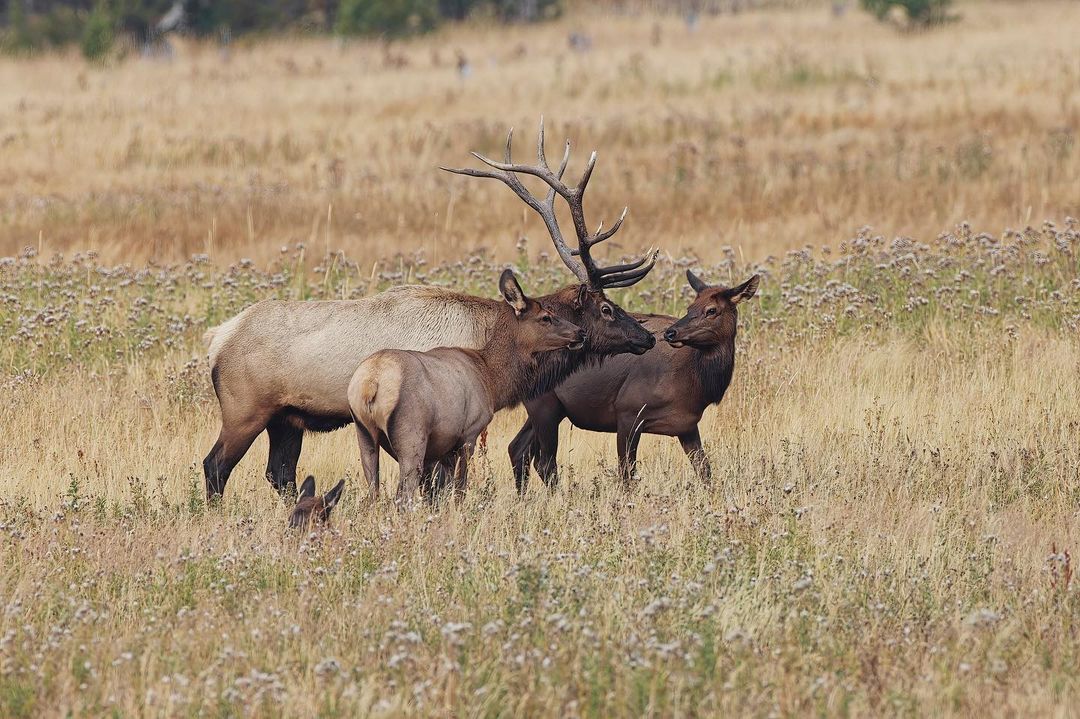
🦌 Wildlife Safety Photography Tip from #CanonExplorerOfLight @adam_jones_photo | “Wildlife is certainly one of the main reason visitors flock to Yellowstone National Park, especially considering the park is the largest intact ecosystem in the lower 48 states. The easiest way to locate wildlife in Yellowstone is to look for car jams, often an indicator that there’s a bear, wolf or elk nearby.
The first tip I have for when you’re pulling up to wildlife is to be courteous and mindful of your surroundings. Do not block the road under any condition as emergency vehicles may need to get through. And when you get out of your vehicle, be especially careful for distracted drivers.
It’s your duty to know the park rules governing how to safely approach wildlife: Distance awareness for bears and wolves is 100 yards, and at least 25 yards from bison and elk. These distances are set for both you and the animals’ safety. Never approach so close that you change the animals’ behavior, and always be sure to leave an animal a natural escape route. Also know your own possible escape route should the situation suddenly change.
At minimum, photographers should use a 400mm lens to create effective images from a safe distance. My workhorse wildlife lens is a Canon 600f4 IS III, to which I often attach a 1.4x teleconverter to create a 840mm lens. This allows for frame filling images at safe distance. Also remember that shutter speed is king when using a telephoto lens; even when filming from a sturdy tripod, shutter speed needs to be relatively fast (1/1600) in order to deliver razor sharp wildlife images.”
📸: #Canon EOS R5
📍: @yellowstonenps
🤝 We are a proud supporter of @ynpforever for over 25 years.
Ciao, Nihon.